
"Ruiru 11"
400 article(s) found

Kenya Coffee Bean Variety Appearance Characteristics Kenya Fine Coffee Bean Flavor Taste Description
Don't underestimate Kenya's small farmers. They are no different from ants and soldiers. Their overall productivity is higher than that of large farms, about six to four, which is quite rare in soybean producing countries. Kenyan coffee is widely appreciated by connoisseurs, thanks in large part to smallholder farmers who work hard to grow good coffee in the foothills. In addition, Kenya beans must have a strict grading system, washing plant out of coffee beans, according to the size

Introduction to the planting Environment of individual Coffee Fruit Coffee Flavor, taste and Price in Kenya
Kenyan coffee is mostly grown at an altitude of 1500m, 2100m, and is harvested twice a year. To ensure that only ripe berries are picked, people must tour the forest about seven times. Kenyan coffee is grown by small farmers. After they harvest the coffee, they first send the fresh coffee beans to the cooperative cleaning station, where the washed and dried coffee is covered with parchment beans.

According to the characteristics of Kenyan coffee beans, is Azaria's special treatment of fermented coffee beans good?
Asalia, Kenya: Kenya Sika Thika processing plant: Asali honey processing plant altitude: 15501750 meters classification: AA TOP varieties: SL28,SL34 treatment: K72 (Kenya 72 hours water washing) Sika is a small town in Nairobi, Kenya. There are many coffee fields around Nairobi, and Sika is an industrial town, but it is surrounded by

Introduction to the flavor and taste characteristics of the crisp and refreshing coffee manor in Jinchu Valley, Kenya
Kenyan coffee is mostly grown at an altitude of 1500m, 2100m, and is harvested twice a year. To ensure that only ripe berries are picked, people must tour the forest about seven times. Kenyan coffee is grown by small farmers. After they harvest the coffee, they first send the fresh coffee beans to the cooperative cleaning station, where the washed and dried coffee is covered with parchment beans.

Introduction of coffee beans and coffee trees in Kenya
Kenya is bordered to the north by Ethiopia, the origin of Arabica coffee trees, but it was not until the beginning of the 20th century that coffee cultivation began. In the 19th century, missionaries introduced Arabica trees from the leaves, but did not plant them in large quantities. It was not until 1893 that coffee was cultivated on a large scale because of the introduction of Brazil's ancient bourbon seeds. That is to say, Kenyan coffee is of Brazilian origin, because of water.

Introduction to the treatment methods of Kenyan boutique coffee
Don't underestimate the small farmers in Kenya, they are just like ants, and their overall production capacity is higher than that of large farms, about six to four, which is quite rare in bean-producing countries. Kenyan coffee is widely appreciated by connoisseurs, thanks in large part to small farmers guarding the foothills and producing high-quality coffee. In addition, Kenya beans must have a strict grading system, according to the size of the coffee beans taken out by the washing plant.

Kenya coffee beans characteristics of the production area taste grinding scale processing method aroma yield trend introduction
Kenya coffee is mostly grown at altitudes of 1500- 2100 meters and harvested twice a year. To make sure only ripe berries are picked, people have to make about seven rounds through the woods. Kenyan coffee is grown by small farmers who harvest the coffee and send it fresh to a cooperative washing station, where the washed, dried coffee is washed into parchment coffee beans (i.e., coated inside).

Kenya Jinchu Coffee Flavor description, Grinding degree, Taste characteristics, introduction to Fine Coffee
Aromatic, full-bodied, with fruit flavor, taste rich and perfect. Kenyan coffee has a wonderful fruit flavor, tastes like BlackBerry and grapefruit, and is a favorite of many coffee gluttons. This coffee has an excellent medium purity, crisp and refreshing taste. It has a fresh flavor and is most suitable for drinking iced coffee in summer. When tasting this coffee, if paired with grapefruit

Sour coffee beans are recommended. Kenyan coffee is sour. Sour coffee beans are more expensive.
Professional coffee knowledge exchange more coffee bean information please follow the coffee workshop (Wechat official account cafe_style) the source of sour Kenya beans friends like sour coffee beans should like Kenya, it is not as elegant as the acidity of Yega Xuefei, but has a very outstanding sour, round, sweet and thick taste. This is due to planting in Kenya.

Kenya Jinchu Coffee Flavor description Grinding characteristics introduction of Fine Coffee in producing areas
Don't underestimate the small farmers in Kenya, they are just like ants, and their overall production capacity is higher than that of large farms, about six to four, which is quite rare in bean-producing countries. Kenyan coffee is widely appreciated by connoisseurs, thanks in large part to small farmers guarding the foothills and producing high-quality coffee. In addition, Kenya beans must have a strict grading system, according to the size of the coffee beans taken out by the washing plant.

The reason why Kenyan coffee beans are sour out of Africa how much is a bag of Kenyan coffee beans
Professional coffee knowledge exchange more coffee bean information please follow the coffee workshop (Wechat official account cafe_style) like sour friends should like Kenyan coffee beans, it is not as elegant as the acidity of Yega Xuefei, but has a very outstanding sour, round, sweet and thick taste. This is due to the raw variety of Kenyan coffee beans, SL2.
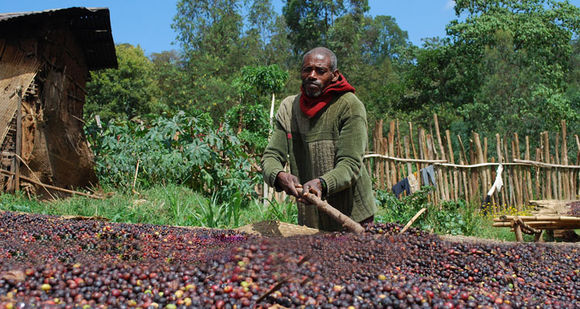
Kenya Coffee Tree Kenya Coffee beans Kenya Coffee Farm Kenya AA++
Kenya is bordered to the north by Ethiopia, the origin of Arabica coffee trees, but it was not until the beginning of the 20th century that coffee cultivation began. In the 19th century, missionaries introduced Arabica trees from the leaves, but did not plant them in large quantities. It was not until 1893 that coffee was cultivated on a large scale because of the introduction of Brazil's ancient bourbon seeds. That is to say, Kenyan coffee is of Brazilian origin, because of water.

An introduction to the flavor and taste of Kenyan boutique coffee with endless aftertaste
Kenya is bordered to the north by Ethiopia, the origin of Arabica coffee trees, but it was not until the beginning of the 20th century that coffee cultivation began. In the 19th century, missionaries introduced Arabica trees from the leaves, but did not plant them in large quantities. It was not until 1893 that coffee was cultivated on a large scale because of the introduction of Brazil's ancient bourbon seeds. That is to say, Kenyan coffee is of Brazilian origin, because of water.

Refreshing taste of Kenya Berman Manor Coffee Flavor description of the characteristics of boutique coffee
Aromatic, full-bodied, with fruit flavor, taste rich and perfect. Kenyan coffee has a wonderful fruit flavor, tastes like BlackBerry and grapefruit, and is a favorite of many coffee gluttons. This coffee has an excellent medium purity, crisp and refreshing taste. It has a fresh flavor and is most suitable for drinking iced coffee in summer. When tasting this coffee, if paired with grapefruit

Flavor and taste of coffee manor in Kenya Berman Manor Ethiopia
Kenya is bordered to the north by Ethiopia, the origin of Arabica coffee trees, but it was not until the beginning of the 20th century that coffee cultivation began. In the 19th century, missionaries introduced Arabica trees from the leaves, but did not plant them in large quantities. It was not until 1893 that coffee was cultivated on a large scale because of the introduction of Brazil's ancient bourbon seeds. That is to say, Kenyan coffee is of Brazilian origin, because of water.

Introduction to the characteristics of the taste-rich Kenyan boutique coffee bean flavor manor
Don't underestimate the small farmers in Kenya, they are just like ants, and their overall production capacity is higher than that of large farms, about six to four, which is quite rare in bean-producing countries. Kenyan coffee is widely appreciated by connoisseurs, thanks in large part to small farmers guarding the foothills in order to grow high-quality coffee. In addition, Kenya beans must have a strict grading system, and the coffee beans taken out by the washing plant are large.

What is the transmission path of coffee? Introduction of basic varieties
A summary of the transmission path of coffee from Ethiopia to Yemen (595-850), Yemen to India and Java (1600), Java to the Netherlands (1706), Netherlands to Paris (1714), Paris to Bourbon (1718) Martinique, Haiti (1723), Mexico, Brazil and other Central and South American countries (1727) last to East Africa (1900). At first, France was the main coffee supplier in Europe.

2017 Kenya's Hottest Coffee-Kenya Mulana Cup Test Champion Kenya AA Coffee Bean
Professional barista exchange, please pay attention to coffee workshop (Weixin Official Accounts cafe_style) today to introduce a super powerful bean! Winner of Kenya Mulana Cup Test Competition from Gondor Processing Plant in Mulana District Kenya, winner batch of AA class!!! Eh, doesn't that sound great? Come on, this isn't just any market cup!

Introduction to the flavor and taste characteristics of the boutique coffee bean manor in Jinchu Valley, Kenya
Aromatic, full-bodied, with fruit flavor, taste rich and perfect. Kenyan coffee has a wonderful fruit flavor, tastes like BlackBerry and grapefruit, and is a favorite of many coffee gluttons. This coffee has an excellent medium purity, crisp and refreshing taste. It has a fresh flavor and is most suitable for drinking iced coffee in summer. When tasting this coffee, if served with pomelo

Kenyan coffee beans with strong, sweet and mellow thickness introduce fine coffee.
Kenya is bordered to the north by Ethiopia, the origin of Arabica coffee trees, but it was not until the beginning of the 20th century that coffee cultivation began. In the 19th century, missionaries introduced Arabica trees from the leaves, but did not plant them in large quantities. It was not until 1893 that coffee was cultivated on a large scale because of the introduction of Brazil's ancient bourbon seeds. That is to say, Kenyan coffee is of Brazilian origin, because of water.